


Mechanism meeting: Security and economic tracks 'advance in parallel'
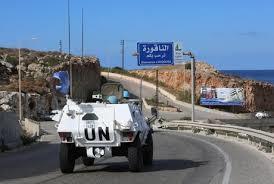
Civilian and military representatives from Lebanon and Israel met on Friday as part of the 'Mechanism' committee monitoring implementation of the year-long Israel-Hezbollah ceasefire, the U.S. Embassy in Beirut said, noting that the "security and economic tracks" advanced "in parallel" in the talks.
It was the second time civilian representatives from Lebanon and Israel have taken part in a committee meeting, which also includes the United States, France and the United Nations.
"Together, participants reaffirmed that progress on security and political tracks remains mutually reinforcing and essential to ensuring long-term stability and prosperity for both parties," a U.S. Embassy statement read.
The meeting took place near Lebanon's border with Israel, and was closed to the press.
The statement said military participants gave "operational updates and remained focused on deepening the cooperation by finding ways to increase coordination through the Mechanism."
"Civilian participants, in parallel, focused on setting conditions for residents to return safely to their homes, advancing reconstruction, and addressing economic priorities," the embassy added.
It said they also "underscored that durable political and economic progress is essential to reinforcing security gains and sustaining lasting peace."
According to Israeli media reports, Israel raised its level of participation in the Naqoura talks by sending Israeli Deputy National Security Adviser Yossi Draznin.
The Lebanese side was meanwhile represented by Ambassador Simon Karam and the American side by the diplomat Morgan Ortagus.
A source familiar with the details told Axios' Barak Ravid that "officially the meeting is focused on economic cooperation along the border, but less officially it is aimed at trying to prevent a resumption of the war."
Israel and Hezbollah clashed for more than a year after the outbreak of the war in the Gaza Strip in October 2023.
The hostilities escalated into two months of full-blown war, which a November 2024 ceasefire sought to end.
Lebanese border areas were devastated by the war, with tens of thousands of people still displaced.
Israel has repeatedly bombed the country despite the truce, usually saying it is targeting Hezbollah members and infrastructure to prevent the group rearming.
Earlier this month, Lebanon and Israel agreed to send civilian representatives to the committee's meetings, a move President Joseph Aoun has said was to avoid another war.
Hezbollah strongly rejected the decision.
Fearing further escalation and facing U.S. diplomatic pressure, Lebanon approved a plan for its army to disarm Hezbollah south of the Litani River, about 30 kilometers (19 miles) from the border with Israel, by the end of the year.


