


British scientists on Tuesday announced plans to create the complete genome sequence of infamous British king Richard III after his remains were found under a car park in 2012.
Geneticist Turi King will lead the £100,000 project ($164,000, 120,000 euros) to produce the first genome sequence from ancient DNA for a named historical figure, the project's co-funders the Wellcome Trust and the Leverhulme Trust said in a statement.
 Full Story
In the dead of the bone-chilling Lithuanian winter, a hunter cocks his gun and squints as he takes aim at a wild boar foraging for food 30 paces away.
A sharp crack from the rifle and the prey, a pregnant female, collapses as blood trickles onto the snow.
 Full Story
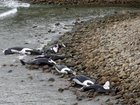
A pod of nine killer whales died on Wednesday in a rare mass stranding on the New Zealand coast, in a loss conservationists said was a major blow to the local orca population.
The pod, comprising eight adults and one juvenile, beached themselves at the remote Blue Cliffs Beach on the far south coast of the South Island, Department of Conservation spokesman Reuben Williams said.
 Full Story
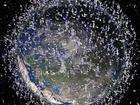
A year ago on Saturday, inhabitants of the Russian city of Chelyabinsk looked skyward, some frozen in fear that a nuclear war had begun.
Overhead, an asteroid exploded in a ball of fire, sending debris plummeting to Earth in brilliant streaks.
 Full Story
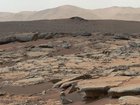
The United States and France unveiled plans to collaborate on a new Mars mission, two years after NASA withdrew from a European partnership to send a probe and lander to the Red Planet.
The project aims to send an unmanned lander to study the deep interior of the dry, dusty planet that is Earth's neighbor, and will be called InSight, short for the Interior Exploration Using Seismic Investigations, Geodesy, and Heat Transport.
 Full Story
New Zealand Prime Minister John Key said Tuesday he wants Japan to apologize over a whaling ship entering Wellington's exclusive economic zone (EEZ), despite warnings for it to keep out.
The New Zealand foreign ministry has already hauled in the Japanese ambassador Yasuaki Nogawa for a dressing down over the incident last Friday, which it labelled "unhelpful, disrespectful and short-sighted".
 Full Story
An Australian farmer who lost his organic produce licence has taken his neighbor to court over contamination from his genetically modified canola crop in a closely-watched test case.
Steve Marsh's case against his neighbor Michael Baxter began in Western Australia's Supreme Court on Monday, seeking damages and a permanent injunction to protect his farm from future contamination.
 Full Story
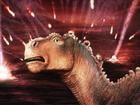
Something wiped out nearly all life on Earth more than 250 million years ago, and whatever unleashed this mass die-off acted much faster than previously thought, scientists said Monday.
Based on an analysis of rocks in China, the end-Permian extinction occurred over the course of 60,000 years, give or take 48,000, researchers reported in the Proceedings of the National Academy of Sciences.
 Full Story
In a London basement, cutting-edge technology is being used to make a computerised Sandra Bullock climb into her rocket. But the team who put her there in "Gravity" have spent the morning working with more basic tools of the trade -- syrup, cheese and chocolate.
"We're trying to create a melting flesh effect for the new Tom Cruise movie," said Richard Graham, visual effects project manager at Framestore, the British company that has helped "Gravity" collect 10 Oscar nominations.
 Full Story
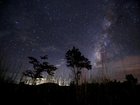
Australian astronomers on Sunday said they had found a star 13.6 billion years old, making it the most ancient star ever seen.
The star was formed just a couple of hundred million years after the Big Bang that brought the Universe into being, they believe.
 Full Story
