


Oil prices spiked near $120 per barrel before falling back Monday as the Iran war intensified, threatening production and shipping in the Middle East and pummeling financial markets.
The price for a barrel of Brent crude, the international standard, surged to $119.50 per barrel early in the day but later was trading at $107.80 per barrel.
 Full Story
French President Emmanuel Macron is traveling to Cyprus on Monday, days after dispatching a warship to the east Mediterranean island nation, where a Shahed drone struck a British air base on its southern coast last week during the Iran war.
Macron ordered the French frigate Languedoc to waters off Cyprus to bolster the European Union member country's anti-drone and anti-missiles defenses. The French president also decided to send ground-based anti-drone and anti-missile defenses to the island, which sustained the first drone attack on European territory.
 Full Story
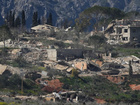
The human rights group Human Rights Watch said in a report Monday that the Israeli military "unlawfully" hit a village in southern Lebanon with shells containing white phosphorus, a controversial incendiary munition.
Through geolocating and verifying seven images, Human Rights Watch said Israel fired white phosphorus using artillery at residential areas in the southern Lebanese village of Yohmor. It happened hours after the Israeli military warned the residents of the village and dozens of others in southern Lebanon to evacuate.
 Full Story
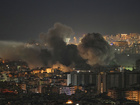
Israel launched a series of strikes on the southern suburbs of Beirut Thursday after ordering all residents of the densely populated area to evacuate.
 Full Story
Global energy trade is in turmoil as war around the Persian Gulf chokes off oil and natural gas shipments, causing prices to soar.
Asia is the most exposed since it relies heavily on imported fuel, much of it shipped through the Strait of Hormuz, the narrow passageway that carries a fifth of global trade in crude oil and liquified natural gas, or LNG.
 Full Story
The House is preparing to vote Thursday on a war powers resolution to halt President Donald Trump's attack on Iran, a sign of unease in Congress over the rapidly widening conflict that is reordering U.S. priorities at home and abroad.
It's the second vote in as many days, after the Senate defeated a similar measure along party lines. Lawmakers are confronting the sudden reality of representing the American people in wartime and all that entails — with lives lost, dollars spent and alliances tested by a president's unilateral decision to go to war with Iran.
 Full Story
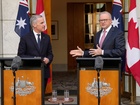
The Canadian and Australian prime ministers on Thursday called for a de-escalation of the Iran war but added the Iranians must never gain a nuclear weapon.
Canada's Mark Carney and his Australian counterpart Anthony Albanese discussed the war during their meeting in Australia's capital, Canberra.
 Full Story
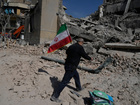
Iran launched a new wave of attacks Thursday morning at Israeli and American bases and threatened that the United States would "bitterly regret" torpedoing an Iranian warship in the Indian Ocean and a religious leader called for "Trump's blood," while Israel said it had begun a "large-scale" attack on Tehran.
Israel announced multiple incoming missile attacks and air sirens sounded in Tel Aviv and Jerusalem. Iranian state television said additional strikes also targeted U.S. bases. The Israeli military said it launched targeted attacks in Lebanon at the Iranian-backed Hezbollah militant group a "large-scale wave of strikes against infrastructure" in Iran's capital, without elaborating. Explosions were heard in multiple locations in Tehran a short time later.
 Full Story
Lebanese civilians fled from the country's south and from Beirut's southern suburbs on Monday, seeking refuge in schools in Lebanon's capital following a new and deadly escalation between Israel and the Iran-allied Lebanese militant group Hezbollah.
Lebanon's Health Ministry reported at least 31 people were killed and 149 wounded in overnight strikes in the Beirut suburbs and southern Lebanon.
 Full Story
A toxic algae bloom known as a red tide is causing the mass deaths of crayfish and other ocean life on parts of South Africa's west coast.
The environment ministry warned people on Thursday against collecting and eating the crayfish, which could be toxic, and police were deployed on some beaches.
 Full Story


